Screenshot The ICODR Podcast, from the International Council for Online Dispute Resolution (icodr.org), covers the rapidly growing field of online dispute resolution. Hosted by Ian Macduff, the podcast interviews ODR experts from around the world to discuss the latest developments in the field, with an eye to ethics, culture, security, and impartiality. I joined the wonderful Ian Macduff for a ...
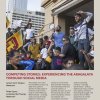
Delivered a lecture on 6 March 2023 over a Twitter Space, moderated by Priyanga Hettiarachi, on my study of Sri Lanka’s Aragalaya over 2022. Download the complete slidedeck here or as a PDF here. You’ll need to have the Powerpoint open to follow along with the lecture. Note that the Powerpoint version has video, and sound, which obviously will ...
“We learn geology the morning after the earthquake” – Ralph Waldo Emerson In the early 80s, and the start of what would be a nearly 30-year brutal war, I was kept awake at night by two things. Planes and ambulances. With fresh military offensives by the Sri Lankan Army incurring heavy casualties, Airforce planes airlifted the dead and dying to ...
First published on the ICT4Peace Foundation website. ### For us the land is matrix and destroyer,Resentful, darkly knownBy sunset omens, low words heard in branches.— Poem in the Matukituki Valley, James K. Baxter “In the woods we return to reason and faith.”— Ralph Waldo Emerson Aotearoa New Zealand’s inaugural hui on countering terrorism and violent extremism, He Whenua Taurikura, meaning a ...
First published on ICT4Peace Foundation website. Meaningful policymaking to fight the swelling seed, spread and supremacy of misinformation benefits from data and evidence alive to socio-political realities. A new report from Aotearoa New Zealand’s Classification Office does precisely this. ‘The Edge of the Infodemic’ presents a snapshot of the country’s media and information ecologies in addition to the risk of ...
Was invited by Associate Professor SungYong Lee at NCPACS to deliver a guest lecture to his 2021 MA class on media’s role in peacebuilding violent conflict generation. Speaking first around the nature of my doctoral research over three years at the Centre, I covered the specific geographic, socio-political focus of my research and at a very high level, how I ...
This article was originally published on the website of Institute for Human Rights and Business. ### The world’s biggest social media platform, Facebook, recently unveiled its human rights policy. It is a step in the right direction. But declaring a policy is one thing; implementing it is quite another. In a recent podcast with the Institute for Human Rights and Business, ...
Cross posted from ICT4Peace Foundation site. ### Special Advisor at the ICT4Peace Foundation, Sanjana Hattotuwa, in conversation with Marvin Hubbard from OAR FM Dunedin, looking at the issues around social media, hate, peace and democracy in Aotearoa/New Zealand and beyond. Broadcast live on OAR 105.4FM Dunedin on 23 March 2021. Original podcast at Community or Chaos programme’s website / podcast ...
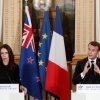
Image courtesy Guardian As part of the New Ec(h)o systems: Democracy in the age of social media, Paul Ash, the New Zealand Prime Minister’s Special Representative on Cyber and Digital and Cyber Coordinator at Department of the Prime Minister and Cabinet joined Special Advisor Sanjana Hattotuwa in a session titled ‘The Christchurch massacre and social media: Lessons learnt and ...
What are “information disorders”? What impact do they have on conflict and other situations of violence? And how can humanitarians better understand them and mitigate their negative effects? Special Advisor of the ICT4Peace Foundation, Sanjana Hattotuwa, took part in a panel discussion on the impact of misinformation, disinformation and hate speech in the humanitarian sector. The discussion was organised ...
Hosted by the National Centre for Peace and Conflict Studies (NCPACS) at the University of Otago, I curated a conference looking at the intersection of social media and democracy on 16 and 17 March 2021. Supported by the first of its kind partnership with Twitter in Aotearoa/New Zealand, the conference was the culmination of doctoral research into representations of ...
Podcast with New Zealand’s Classification Office on the role of social media platforms both in terms of promoting incendiary content and how some have gone on to protect and strengthen democracy. Listen to the podcast here (Episode 7).
Invited by Transparency International New Zealand, I gave a presentation titled ‘Demons in our demos’ for a Zoom gathering held on 29 July 2020, hosted by the University of Wellington as part of their leadership week. PDF of event description here. Are we collectively ruining democracy? Polarisation of thought and belief seems to be on the increase particularly in the ...
This article first appeared on Techonomy. ### Facebook is a company that responds to pressure, and to lawsuits, but we in the Global South, at least as much affected by its harms as users in the United States, are at a significant disadvantage in wielding such tools on our own behalf. That has generally meant we have made less progress ...
Cross-posted from the ICT4Peace Foundation site. ### Framing In 2002, as an integral part of an official ceasefire negotiations processes in Sri Lanka after decades of war, commercial off-the-shelf-software (COTS) was adopted and adapted to support the process of mediation, anchored to a one-text process. The platform, co-architected and curated by Sanjana Hattotuwa, supported encrypted and asynchronous communications, multi-lingual, context ...
After an elephantine gestation, Facebook released its civil rights audit on 7th July 2020. The 90 page report, anchored in the main to civil rights issues in the US, is absolutely scathing in its criticism of Facebook. Nothing of what is captured in it is new or surprising to those of us who have flagged these issues for years. ...
Updated the Google Custom Search Engine (CSE) for official government websites I first created in November 2016. Access latest version here. Queries can be in Tamil, Sinhala or English. Deleted sites indexing former President Maithripala Sirisena & PM Ranil Wickremesinghe. Added the following websites to the CSE, http://www.mahindarajapaksa.lk https://en.wikipedia.org/wiki/Mahinda_Rajapaksa https://en.wikipedia.org/wiki/Rajapaksa_family https://twitter.com/PresRajapaksa https://en.wikipedia.org/wiki/Got
First reading Facebook released the company’s Human Rights Impact Assessment for Sri Lanka today. At the time of writing, Joshua Brustein writing for Bloomberg has one of the first takes on the report, highlighting Facebook’s apology for its role in Sri Lanka’s violence. Commissioned by Facebook, the report was conducted and written by Article One. As noted in the ...
Cross-posted from the ICT4Peace Foundation’s site. ### On the invitation of Christina Goodness, Chief Information Management Officer at the Departments of Peacebuilding, Political and Peace Operations DPPA-DPO, the ICT4Peace Foundation’s Sanjana Hattotuwa gave a presentation titled ‘Beyond the global reset: Towards pandemic panopticons or something radically new?’ as part of the ‘(un)data Seminar Series on Outrageous Questions’. Scheduled for 1.5hrs ...
On 14 April 2020, Sanjana Hattotuwa, an Advisor at the ICT4Peace Foundation had a conversation with Helena Puig Larauri, Co-founder and Director at Build Up over Skype, on issues anchored to two blog posts penned by Helena. Digital peacebuilding and the pandemic, Part 1 and Part 2, covers a range of issues impacting peacebuilding as a consequence of the ...